
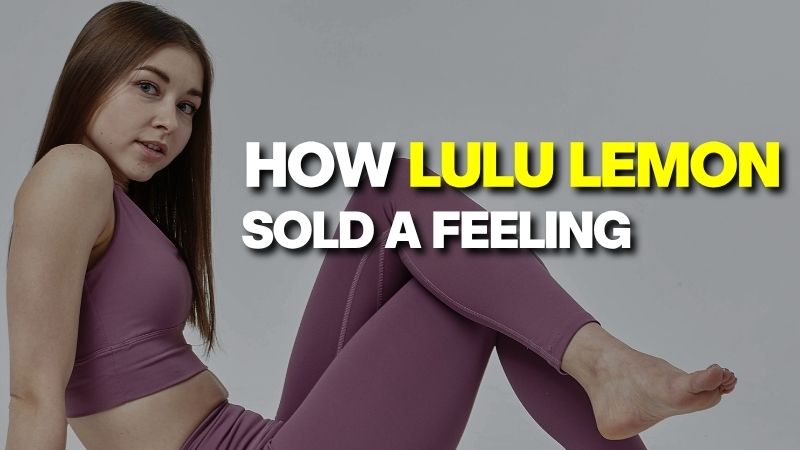
The Lululemon origin story begins with a strange contradiction.
How did a pair of stretchy workout pants become something people save for, line up to buy and proudly wear far beyond the yoga studio?
I used to wonder the same thing.
I had heard all the familiar praise. The fabric felt weightless. The waistband stayed in place. The pants moved like a second skin. The smooth construction created a clean fit without the distracting bunching or shifting that can happen with ordinary workout clothes.
I assumed at least half of it was clever branding.
Then I tried on a pair.
The first surprise was the fabric. It felt soft without feeling weak. The waistband was secure but not stiff, and the material moved comfortably instead of fighting every step. A few minutes later, I caught myself performing a very convenient calculation.
Skip a handful of café visits. Avoid buying two inexpensive pairs that might sit untouched in a drawer. Buy the one pair I would probably wear every week.
That is where Lululemon’s product design and marketing meet. The customer does not feel as though she is buying a luxury item. She feels as though she is making a practical decision.
But behind the famous leggings is a much stranger story involving a Vancouver yoga studio, live product experiments, local fitness communities and a brand name rooted in a founder’s offensive idea about Japanese pronunciation.
Lululemon did not simply sell yoga pants.
It sold the feeling of becoming the kind of person who wears them.
Before the Leggings, There Was West Coast Sportswear
Lululemon founder Chip Wilson was not new to technical clothing when he entered the yoga market.
He had previously built Westbeach, a company associated with surf, skate and snowboard apparel. That experience helped him understand something important: people involved in physical activities were willing to pay for clothing that solved real problems.
Technical apparel could offer more than a logo.
It could stretch, resist wear, manage moisture and make movement feel less distracting.
Yoga presented a new design problem
During the late 1990s, yoga was growing in popularity, particularly in communities such as Vancouver’s Kitsilano neighbourhood.
Wilson saw an opening. Many available workout clothes had not been designed specifically for the repeated stretches, bends and long ranges of motion involved in yoga.
A yoga garment needed to:
- Stretch in more than one direction
- Recover its shape after being stretched
- Stay comfortably in place
- Manage heat and perspiration
- Reduce distracting seams or pressure points
- Remain useful outside the studio
The final point would prove especially important.
Lululemon was not just entering the yoga market. It was arriving shortly before workout clothing escaped the gym and became everyday clothing.
A Design Studio by Day, Yoga Studio by Night
Lululemon was founded in Vancouver in 1998.
The company’s early space was not a conventional retail store. According to Lululemon’s published history, it operated as a design studio during the day and a yoga studio at night.
A standalone store followed in November 2000 on West 4th Avenue in Vancouver’s Kitsilano neighbourhood. Lululemon’s official history still describes that design-studio-by-day, yoga-studio-by-night beginning.
It sounds charming now, almost like a polished startup legend.
Yet the arrangement also had a practical advantage.
The yoga studio doubled as a product laboratory
The company could watch how clothing behaved during actual movement.
Did the waistband shift? Did the fabric become heavy with perspiration? Did the seams irritate the wearer? Did the material recover after repeated stretching? Were students adjusting their clothing during class?
These were not abstract questions in a design meeting. The answers were moving around the room every night.
The students could also provide immediate feedback. Instead of sending prototypes into an anonymous market, the company had a nearby community of potential customers and testers.
Today, companies gather product data through apps, online reviews and analytics dashboards. Early Lululemon had something more direct: a room full of people bending, stretching and explaining what felt wrong.
Why Does “Lululemon” Have So Many L’s?
A name like Lululemon sounds as though it must have a hidden yogic meaning.
Perhaps it came from Sanskrit. Maybe it represented balance, movement or enlightenment.
It did not.
The founder’s controversial explanation
Chip Wilson has said that Japanese buyers seemed to view North American brand names containing the letter L as authentically Western because the sound does not exist in Japanese in the same way it does in English.
He therefore selected a name containing several L sounds.
That could have been described as a calculated international branding decision. Wilson went further, however, making a dismissive comment about finding Japanese speakers’ attempts to pronounce the name amusing.
The widely repeated naming account has been examined by Snopes and reported by other publications based on Wilson’s own past remarks.
Memorable does not mean harmless
From a narrow branding perspective, the unusual name worked.
It was distinctive. It looked different on a storefront. It was difficult to confuse with another athletic company. The repeated letters made the word visually memorable.
But the thinking behind it relied on turning a linguistic difference into a joke.
Both conclusions can be true:
The name was commercially memorable, and the founder’s explanation was culturally dismissive.
Treating the story only as a funny marketing trick would erase the reason it remains controversial.
It is also important to separate Wilson’s personal remarks from the present company. Wilson has not held an operating role at Lululemon since 2015, and the company has publicly stated that some of his later views do not represent its values.
The First Store Was Selling Feedback, Not Just Clothing
The early Vancouver location created a close relationship between the people designing the products and the people wearing them.
That influenced more than fabric.
Employees became product guides
Lululemon stores developed a culture of asking customers what they planned to do in the clothing.
Were they practising yoga? Running? Training in a humid room? Looking for softness or stronger support? Did they want pockets? A lightweight sensation or a more structured fit?
This approach made the purchase feel personalized.
The employee was not simply saying, “These leggings look good.” The conversation was about which fabric and construction matched a particular activity.
Fitting rooms became part of the product experience
The moment of trying on the clothing was crucial.
Technical features are difficult to communicate through a clothing rack. Softness, stretch, waistband stability and seam placement become meaningful only when the garment is worn and tested through movement.
Lululemon understood that the fitting room could do more persuasive work than a traditional advertisement.
A customer who entered sceptical could leave thinking about all the places the leggings might be used: yoga, errands, travel, school pickup, walking and everyday life.
What Makes Lululemon Fabric Feel Different?
Not every Lululemon product feels the same, because the company uses different fabrics for different activities.
A soft yoga fabric is not automatically the best option for high-intensity training. A compressive running tight may feel unnecessarily firm during a relaxed class.
| Fabric | Typical sensation | Common intended use |
|---|---|---|
| Nulu | Buttery-soft, light and minimally distracting | Yoga and lower-intensity movement |
| Everlux | Supportive, breathable and fast-drying | Training and high-perspiration workouts |
| Luxtreme | Smooth, cool and more structured | Running and training |
| Luon | Soft with a more substantial feel | Yoga and everyday wear |
These descriptions reflect general product positioning, not a promise that every person will experience the fabrics identically.
Four-way stretch
Four-way stretch allows a textile to move both horizontally and vertically.
This matters during yoga because the garment must follow several directions of movement without becoming permanently distorted. Added elastic fibres such as Lycra help the fabric return to its original form.
Lululemon explains that its yoga clothing uses stretch and shape-retention features to reduce riding up and sagging during movement. Its official yoga clothing guide also distinguishes the softness of Nulu from the more supportive, quick-drying characteristics of Everlux.
Moisture management
Workout clothing does not need to remain perfectly dry to feel more comfortable.
Moisture-wicking textiles are designed to move perspiration away from the skin and spread it across a larger area, where it may dry more efficiently.
Luxtreme is marketed as a four-way-stretch, sweat-wicking fabric with a smooth and cool sensation. Everlux is designed for faster drying and more intense training conditions. Lululemon’s fabric guide explains the intended differences.
The fabric is only part of the experience
Waistband construction, panel placement, pockets and seams can be just as important as the textile.
A garment may feel more secure because of:
- The height and width of its waistband
- The placement of interior elastic
- The direction of the fabric panels
- Flat or reduced seams
- The amount of compression
- The correct size and inseam
- Construction intended to reduce visible bunching
This helps explain why two garments made from similar fibre blends may not feel identical.
Lululemon’s advantage is not that it discovered stretch fabric. It built an entire product experience around the small annoyances people notice while moving.
The Product Was Good, but the Marketing Was Smarter
Technical fabric explains only part of Lululemon’s growth.
Many companies can manufacture stretchy clothing. Far fewer can make customers feel that buying it connects them to a more active and intentional life.
Local instructors became trusted messengers
Instead of depending only on distant celebrities, Lululemon built relationships with yoga teachers, trainers and local fitness leaders.
These people had credibility inside their communities. Customers attended their classes, followed their advice and saw how the clothing performed in a real setting.
A recommendation from a familiar instructor did not feel like a conventional advertisement.
It felt like guidance from someone who already lived the lifestyle the customer hoped to build.
Stores became community spaces
The early design-studio and yoga-studio model grew into a broader retail philosophy.
Stores hosted or supported:
- Yoga sessions
- Running groups
- Local fitness events
- Community gatherings
- Relationships with instructors and athletes
- Conversations about movement and wellness
The brand was no longer waiting for customers to need pants.
It was helping create more occasions to wear them.
The real product was identity
Buying a pair of Lululemon leggings could communicate several ideas at once:
- I value movement.
- I care about comfort and performance.
- I belong to an active community.
- I am willing to invest in products I use frequently.
- My workout clothing is part of my everyday wardrobe.
This was more powerful than merely claiming that the pants were durable.
Lululemon attached its clothing to an identity customers could practise every time they put it on.
Scarcity Made Shopping Feel Like a Small Hunt
Colour also became part of the strategy.
Core black leggings could remain reliable staples, while seasonal shades and changing collections created reasons to return. Customers who found a favourite colour or style could not always assume it would remain available indefinitely.
That uncertainty encouraged quicker decisions.
However, ordinary sellouts should not automatically be described as manufactured scarcity. Demand forecasting, production schedules and unexpected popularity can also cause products to disappear.
The more careful conclusion is this:
Changing colours and limited availability gave customers a reason to watch the brand even when they already owned functional workout clothes.
A basic product became collectible without officially calling itself a collectible.
Lululemon Did Not Invent Athleisure—But It Helped Normalize It
There was a time when stretchy workout pants clearly belonged inside a gym or yoga studio.
Then the boundary began to disappear.
People wore technical clothing to cafés, airports, grocery stores, school drop-offs and informal workplaces. Comfort no longer had to look like sleepwear. Workout clothing became presentable everyday clothing.
One outfit, several lives
A successful pair of leggings could move through an entire day:
- Morning yoga
- A coffee stop
- Working from home
- Running errands
- An evening walk
That versatility changed the customer’s price calculation.
A garment worn once a week for exercise might seem expensive. A garment worn repeatedly in several settings could feel easier to justify.
The company was not merely persuading people to spend more on yoga pants. It was helping build a world in which yoga pants could be worn almost anywhere.
My “Just One Pair” Experiment
Premium brands sometimes charge heavily for a name while offering little functional difference.
That was my concern.
With Lululemon, I could understand at least part of the price after trying the product. The fabric felt noticeably soft. The waistband offered reliable support, and the construction stayed comfortable through movement. It felt less like wearing stiff athletic equipment and more like adding a flexible layer.
That does not make every price automatically reasonable. It does explain why the brand’s marketing works so well.
The product gives the story something real to stand on.
The coffee calculation
Then comes the familiar private negotiation.
I could buy several cheaper pairs. I could skip a few café visits. I could think about cost per wear instead of the number on the tag.
This is the exact moment when Lululemon stops feeling like luxury and starts feeling like an investment.
Of course, “investment” is one of shopping’s favourite words. Clothing does not increase in financial value simply because we use that label.
A better question is:
Will I wear this enough, and does it perform well enough, to justify the cost in my actual life?
For me, the comfort and performance felt meaningful. Another customer may prefer a different level of support, another fabric or a lower price.
A personal recommendation is still personal—not universal proof.
Why Do Customers Pay More Than $100?
The price is not determined by fabric alone.
Customers may be paying for a combination of:
- Technical textile development
- Garment construction
- Fit testing
- Product variety
- Retail locations and staff
- Community programs
- Brand recognition
- Customer service
- Limited colours and repeated product releases
- The social meaning attached to the logo
Current prices vary by market, product and promotion. Many popular leggings sit around or above the CAD $100 range, while sale prices and different styles may cost less.
The $100 figure is therefore a useful symbol, not the fixed price of every pair.
Function and status reinforce each other
A purely status-driven product can lose credibility if it performs poorly.
A purely functional product may never become culturally desirable.
Lululemon combined both.
Customers could explain the purchase in practical language—softness, stretch, sweat management and cost per wear—while also enjoying the brand’s social recognition.
That combination is difficult for competitors to reproduce through advertising alone.
Is Lululemon Really Worth the Price?
There is no single answer.
It may be worthwhile when:
- The garment will be worn frequently
- The fabric matches the intended activity
- The waistband and seams feel comfortable
- The customer values a specific level of support
- One versatile pair may replace several rarely worn items
- The purchase fits comfortably within the customer’s budget
It may not be worthwhile when:
- The logo is the main reason for buying
- The intended activity is unclear
- The customer dislikes synthetic technical fabrics
- Similar clothing already fills the wardrobe
- The price will create ongoing financial stress
- A less expensive garment already meets the same practical need
The strongest argument for Lululemon is not that everybody needs its leggings.
It is that enough customers notice a genuine performance difference to make the larger branding story believable.
A Brilliant Brand With an Uncomfortable Beginning
Lululemon’s rise contains several stories at once.
It is the story of a Vancouver company that stayed close to its first customers. It is a product-design story built around stretch, perspiration, movement and small details. It is a community-marketing story in which yoga instructors became more persuasive than celebrity advertisements.
It is also the story of a memorable name connected to a founder’s culturally offensive reasoning.
Those facts should not be blended into a smooth corporate fairy tale.
The company’s product innovations can be discussed without excusing the comment. The naming strategy can be recognized as commercially effective without calling the prejudice behind it harmless.
That tension makes the story more revealing.
Successful brands do not always come from perfectly admirable ideas. Sometimes their products, communities and later organizations grow far beyond the worldview of the person who named them.
From Yoga Pants to a Global Uniform
Canada Goose transformed extreme-weather workwear into an urban winter symbol.
Lululemon performed a similar transformation in a softer setting. It took clothing associated with yoga practice and helped turn it into an international everyday uniform.
Both brands began with function.
Both built credibility through people who genuinely used the products.
Both attached their clothing to a larger Canadian lifestyle story.
And both eventually sold much more than protection or performance.
Canada Goose sold the idea of surviving extreme cold. Lululemon sold the idea of moving through life with comfort, purpose and control.
That is the real Lululemon origin story.
A small Vancouver design studio listened to yoga students. Technical clothing improved through real use. Local instructors turned into trusted messengers. Stores became community spaces. Leggings moved beyond exercise, and an unusual name became one of the most recognizable words in global athletic fashion.
The company sold fabric, certainly.
But what customers carried out of the store was also a feeling: that the person they wanted to become might be waiting just one comfortable layer away.
READ NEXT: