
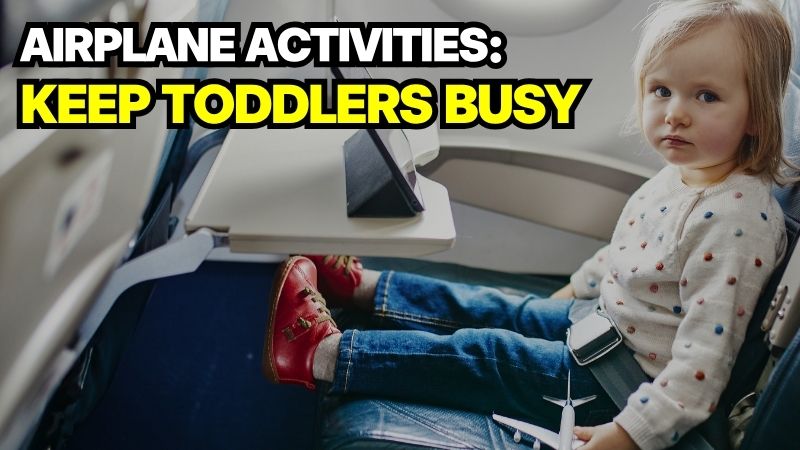
How to keep toddlers busy on a plane starts long before you board. If you have a busy little boy like mine, you already know the hardest part of flying is not the seatbelt sign. It is the endless waiting, the bottled-up energy, and that moment when a tiny human decides he is absolutely done being contained.
My son has flown many times, and one thing has stayed true from toddlerhood into the preschool years: he has always had a lot of energy. So I stopped chasing the idea of a “perfect” flight. Instead, I built a routine that makes the day easier, calmer, and much more manageable for everyone.
This is the real system I use now. It is a mix of quiet activities, strategic snacks, low-pressure screen time, comfort items, and simple carry-on essentials that actually earn their place in my bag.
✈️ Why I Don’t Rely on One Big Trick
When parents search for flight tips, they are often hoping for one magic answer. One perfect toy. One miracle snack. One show that buys two peaceful hours.
I have never found that to be realistic.
What works better is a rhythm.
A little movement.
A little novelty.
A familiar snack.
A small activity.
A cuddle.
A screen break when needed.
Then repeat.
That rhythm works far better than overpacking bulky toys or expecting one activity to carry the entire flight.
👟 Before the Flight: Burn the Energy First
If your child is high-energy, this is one of the best things you can do.
My son was energetic from a very young age, so before a flight I try to let him walk as much as possible. We get to the airport early enough to avoid rushing, then once the important parts are done, I let him move. We walk the terminal. We look at windows. We watch airplanes. We take little loops instead of parking him in one seat too early.
I want him to board with at least some of that energy already spent.
If you have two adults, one person can stay with the child while the other grabs food or handles last-minute errands. That alone makes the airport feel less chaotic.
Before your trip, it’s also worth checking the latest official family travel guidance, especially if you’re flying internationally or connecting through different airports. I usually recommend bookmarking the Government of Canada’s air travel with children guide and the TSA’s traveling with children page.
My pre-boarding rule
I do not want my child sitting still for a long time before he even gets on the plane.
The more he moves beforehand, the better the odds once we are in the air.
🎒 Get Organized Before Boarding Starts
Boarding gets messy fast when you are juggling kids, snacks, electronics, wipes, and maybe a stroller too.
I always try to be fully ready before boarding begins.
That means:
- gate-check items already tagged
- water bottle filled if possible
- snacks easy to reach
- comfort item accessible
- emergency pouch in the personal item under the seat
- not buried in the overhead bin
The biggest lesson I learned is this: if something matters in the next two hours, it should not be packed far away.
If you want to double-check airport and child travel guidance before you go, the Government of Canada’s family air travel page and the TSA child travel guide are both helpful to review before a trip.
My Real Carry-On Strategy for Flying with Young Kids
I used to think I needed more stuff.
Now I think I need the right stuff.
I pack by category, not by panic.
1) Quiet activities that do not take much space
This is my favorite category because it keeps the bag lighter and the seat area less chaotic.
I like:
- thin puzzle books
- small drawing pads
- coloring books
- reusable sticker books
- mini doodle boards
- simple activity books
- scratch art paper for older toddlers or preschoolers
- slim notebooks and crayons that do not roll everywhere
Small, flat items are easier to manage than bulky toys. They are also easier to rotate when your child gets bored.
2) New toys I do not show in advance
This works so well.
I bring a few small toys from a dollar store, party section, or discount bin. Nothing huge. Nothing noisy. Nothing with a hundred loose parts.
And I do not show them before the trip.
That surprise factor matters. When my child starts losing patience, I pull out one new item at a time. Not all at once. Just one.
It feels fresh. It buys time. It keeps the flight from peaking too early.
3) Favorite snacks plus safe backup snacks
Airplane food is unpredictable for adults, let alone kids.
So I always bring foods I know my child will actually eat.
I mix familiar favorites with a few better-for-you options. Depending on age, that might mean:
- crackers
- soft bread or mini rolls
- fruit pouches
- plain cereal
- granola bars
- mild cookies
- dried fruit
- simple rice snacks
- kid-friendly grain porridge pouches
- applesauce or puree pouches
I avoid going too heavy on very sugary snacks right away because that can backfire.
I also like having a “safe snack” I can count on when everything else fails.
📱 Screens Are Helpful, But I Don’t Start There
I am not anti-screen. I am anti-using-it-all-up-too-early.
That is the difference.
I bring headphones and a laptop or tablet loaded with favorite shows and downloaded videos. Downloading ahead of time matters more than parents think. Wi-Fi can be unreliable, and nothing is worse than promising a favorite show and then realizing it will not load.
But I try not to make screens my first move.
Instead, I usually go in this order:
- window watching
- snacks
- quiet activity
- conversation or simple games
- comfort item or cuddle
- screen time when attention really drops
This approach stretches the whole day much better.
A note on headphones
If your child is not used to headphones, try them before the trip. The plane is not the best place for a first introduction.
🪟 The Window Seat Helps More Than You’d Think
Whenever possible, I like my child in the window seat.
It gives him something to look at.
It cuts down on the urge to wander into the aisle.
And honestly, the view itself can buy a surprising amount of time.
For curious kids, watching planes, clouds, trucks, and runway lights is part of the entertainment.
That said, every child is different. If your child needs frequent bathroom trips or gets restless about being boxed in, another setup may work better. I just find the window seat is usually the easiest option for us.
🧸 Don’t Forget the Attachment Toy
This is one of those small things that can make a very big difference.
For unfamiliar places and sleep disruptions, I always like bringing my child’s attachment stuffed animal. A favorite teddy or comfort toy can help a child settle on the plane, at the hotel, and during naps in a completely new environment.
A familiar object makes an unfamiliar place feel less strange.
For kids who struggle to sleep away from home, this matters.
I would honestly rank a beloved stuffed animal above a lot of “smart” travel gadgets.
🔄 My Best Tip for Long Flights: Rotate, Don’t Dump
One of the biggest mistakes parents make is handing over everything too early.
I never unload all the toys, books, snacks, and devices at once.
I rotate.
A book.
Then a snack.
Then stickers.
Then the window.
Then a new toy.
Then a cuddle.
Then maybe a downloaded show.
That rhythm keeps the day from feeling flat too soon.
This is the real answer behind how to keep toddlers busy on a plane. It is not about stuffing your bag with more. It is about pacing what you already packed.
🎒 What I Always Keep Under the Seat
I keep all true essentials in my personal item, not in the overhead bin.
My under-seat must-haves:
- wipes
- tissues
- clean tissues for faces and hands
- plastic bags for dirty clothes or messes
- extra outfit for the child
- extra top for the parent
- small blanket
- child neck pillow if they like one
- medicine or simple emergency items
- water
- one guaranteed snack
- one favorite comfort item
If your child spills, gets motion sick, or suddenly wants a change of clothes, you do not want to be standing in the aisle waiting for help while your bag is somewhere overhead.
Plastic bags are underrated
They help with:
- dirty clothes
- wet wipes
- snack trash
- unexpected mess
- anything sticky, smelly, or gross
They take up almost no room and solve a lot of problems.
I Pack for “What If,” Not Just for “Normal”
Travel days are not regular days.
Naps can be skipped.
Meals can go wrong.
Delays happen.
A child who is easy at home can suddenly struggle in a loud, bright, crowded airport.
So I pack with flexibility in mind.
That means:
- one more snack than I think I need
- one more activity than I think I will use
- one more wipe pack than feels necessary
- one comfort item I know will matter later
It is not about overpacking. It is about packing for reality.
😴 How I Handle Sleep on Travel Days
I do think timing matters.
If I can line up the flight with a naturally sleepy period, that helps. If not, I still try to protect the feeling of rest as much as possible.
That means:
- bringing the familiar stuffed animal
- packing a small blanket
- using a child neck pillow if tolerated
- dimming stimulation when possible
- saving the calmest content for the hardest stretch
But I no longer expect perfect naps on travel days.
That expectation only makes everything feel more stressful.
My goal is not perfect sleep. My goal is a child who feels as secure and regulated as possible.
✨ A Few Things That Help More Than People Expect
Let them look silly-busy before the flight
Walking. Exploring. Looking out the big airport windows. Even just doing laps near the gate helps more than forcing quiet too early.
Keep the fun items small
The best airplane toys are often not the fanciest ones. They are the ones that fit in one hand, stay quiet, and come out at the right time.
Use names and safety details
If you are in a busy airport, a child name tag, bag tag, or simple identifying accessory can bring peace of mind. Some parents also like a child safety strap in crowded transit moments.
Bring what your child already loves
Travel is not the moment to become overly idealistic. If your child adores one specific snack, one certain blanket, or one slightly worn stuffed animal, that item has earned a seat in the carry-on.
What I Skip
I skip anything that is:
- too noisy
- too bulky
- too messy
- too hard to reset if dropped
- too exciting too early in the flight
I also try not to depend only on talking to my child the whole time. Of course I talk with him, but on a long travel day, conversation alone is usually not enough. Kids need visual breaks, tactile play, familiar comfort, and little shifts in stimulation.
That is why flat activity books, quiet novelty toys, snacks, and one or two downloaded shows work so much better together than any single tactic on its own.
Final Thoughts
How to keep toddlers busy on a plane is really about creating tiny pockets of comfort, novelty, and movement throughout a long day.
That is what works for us.
My son has flown many times, but I still do the same basics every single trip: let him walk before boarding, pack slim quiet activities, save new toys for later, bring familiar snacks, keep screens as a backup instead of the opening act, and never forget the stuffed animal that makes a strange place feel a little more like home.
I also like to check official travel guidance before each trip, especially when airport rules or family travel details may have changed. The Government of Canada and TSA both have useful family travel pages worth saving.
The goal is not a perfect flight.
The goal is a flight that feels manageable, calm enough, and maybe even a little sweeter than you expected.