
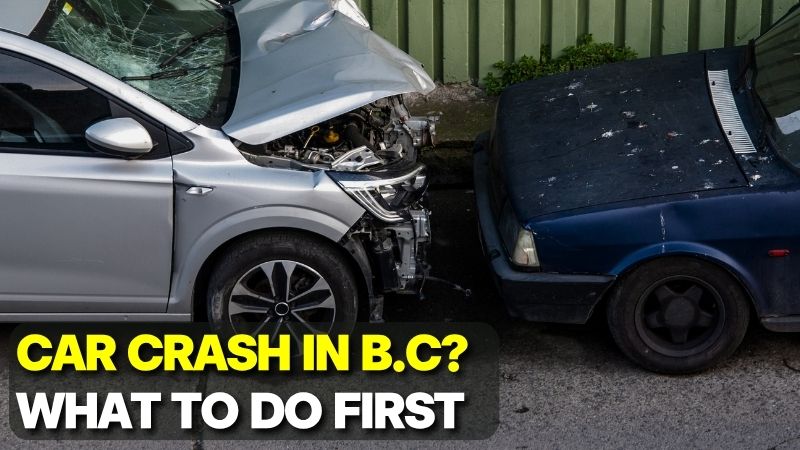
Car accident in BC for newcomers can feel like two shocks at once. First, the crash itself. Second, the terrifying feeling of not knowing what happens next in a place that still feels new.
If you just got your licence, exchanged your foreign one, or only recently started driving here, I can imagine how deeply this might have shaken you. B.C. roads, road signs, roundabouts, pedestrian rules, and insurance systems can already feel like a lot. Add a crash on top of that, and it is completely normal to feel like your heart dropped to your feet. 💛
So before we talk about paperwork, claims, or fault, here is the first thing I want to say: please do not blame yourself too quickly. Sometimes the biggest mistake after a first crash is not the driving mistake. It is the emotional spiral that comes after it. You are still learning a new system. You are still adjusting. That matters.
In B.C., the basic post-crash flow is clearer than many newcomers expect. ICBC says the first priorities are safety, collecting the right information, and reporting the claim. If anyone is hurt, call 911. If it is safe, move the vehicles out of traffic. Do not argue about fault at the scene. Then gather names, licence details, plates, witness contacts, and photos before you report the crash to ICBC. That is the backbone of the process. See the official What to Do After a Crash checklist and Report and View Your Claim pages.
Quick Table: What to Do After a Car Accident in B.C.
| When | What to do | Why it matters |
|---|---|---|
| Right after the crash | Check for injuries, call 911 if needed, move to safety if possible | Prevents a second crash and protects everyone |
| At the scene | Exchange details, collect witness contacts, take photos | Helps ICBC assess the claim clearly |
| As soon as you can | Report the crash to ICBC | Starts your claim, repair, and recovery process |
| If you are hurt | Start treatment and keep your claim number ready | Connects you to B.C. care and recovery benefits |
| In the days after | Follow up on fault, repairs, and documents | Keeps the claim moving and reduces confusion |
That order may seem simple, but when people are scared, they often skip the parts that matter most. A short mental checklist is easier to remember than a legal explanation. That is why this article focuses on what real people usually need first, not what sounds the most technical. ICBC’s online claims system is built around that same order: report first, then manage documents and next steps.
What Should You Do First After a Car Accident in B.C.?
The first answer is simple: check people before you check the car.
If anyone is injured, call 911. If the vehicles are creating danger and it is safe to do so, move them off the road. ICBC’s crash checklist says to avoid discussing who caused the crash while you are still at the scene. That advice matters more than many people realize. When someone is nervous, apologizing can slip out automatically. But responsibility is not decided by a panicked roadside conversation. It is assessed later using the available evidence.
A helpful official reference to keep bookmarked is ICBC’s What to Do After a Crash checklist. It is short, practical, and much easier to use in a stressful moment than a long policy page.
If your English disappears when you are nervous, that is okay too. You do not need a perfect explanation on the roadside. In most situations, calm and simple phrases are enough: “Are you okay?” “Let’s exchange information.” “I need to report this to ICBC.” That is more than enough to get through the first few minutes.
What Information Should You Collect From the Other Driver?
This is one of the most important parts of the whole process. And it is also where scared beginners often miss things.
ICBC says you should record the driver’s name, contact information, driver’s licence number and issuing province or state, the licence plate, the vehicle year, make and model, and insurance details if the other vehicle is not from B.C. You should also collect witness names and contact details, note the location, weather, road conditions, and take photos of both the damage and the wider scene.
That may sound like a lot, but this is exactly the information people wish they had later. After the adrenaline fades, many details become blurry. You may forget which lane each car was in, what the light looked like, or even what the other vehicle looked like. A few careful photos can save you from that. Try to get wide shots, close damage shots, and anything that shows lanes, road markings, or the position of the vehicles.
If you can remember only one thing from this section, let it be this: photos and basic facts are your best friends after a crash.
Do You Need to Call the Police, or Only ICBC?
This is one of the most common questions newcomers ask.
The cleanest answer is this: if someone is injured, call 911. For other crashes, the next step is often reporting the claim to ICBC. Hit-and-run situations are different. ICBC says that if you were injured in a hit and run, or if there is a suspect, you should report it to the police as soon as you reasonably can, ideally within 24 hours, and report the claim to ICBC as soon as possible and no later than six months after the crash.
That means not every minor scrape requires police attendance, but injuries, immediate danger, or a hit and run change the picture. This is exactly why a simple B.C.-specific guide matters. Many newcomers search broad Canadian advice and end up with answers that do not reflect how ICBC-based claims are actually handled in this province.
How Do You Report the Crash to ICBC?
Once everyone is safe and you have the basics, the next step is opening a claim.
ICBC says you can report a claim online or by phone, and then use the online system to check details, upload documents, and follow your file as it moves forward. That means you do not need to solve every part of the situation at the scene. What you need is enough information to begin the process properly. The best place to start is Report and View Your Claim.
If your mind is all over the place, here is a short version of what usually matters most when you report:
Have these details ready
- when the crash happened
- where it happened
- who was involved
- whether anyone was hurt
- whether you have witness details
- whether you have photos
- whether police were involved
That is enough to start. You do not need to sound polished. You just need to be accurate.
What If Your English Is Not Strong Enough for a Stressful Phone Call?
This is a very real fear. And honestly, it deserves a real answer.
ICBC says it offers free over-the-phone interpretation services in 170 languages for claims, insurance, and driver licensing needs. That is a big deal for people who are already scared and worried they will say the wrong thing. If this is the part that worries you most, keep ICBC’s Language Services page nearby.
This point is worth saying clearly: you do not need perfect English to report a crash properly in B.C. You need the right facts, and you need to know help is available.
What If You Are Injured After a Crash in B.C.?
This is another area where people panic, especially if they think fault decides whether they can get care.
Under B.C.’s Enhanced Care system, ICBC says B.C. residents injured in a crash are entitled to care and recovery benefits no matter who was responsible. ICBC also says there are pre-approved treatments available in the first 12 weeks after the crash when they are necessary for recovery, and starting care quickly matters because that early window can pass fast. The official overview is on ICBC’s Enhanced Care benefits page.
That does not mean every situation feels simple. But it does mean the system is designed so that treatment is not supposed to depend on winning an argument at the roadside. That is an important difference, and it helps many people breathe again after the first wave of fear.
A practical tip: once your claim is opened, keep your claim number somewhere easy to reach. That small step makes later calls and treatment appointments much easier.
Will Your Insurance Go Up If the Crash Was Your Fault?
This is one of the biggest silent worries after any first accident.
ICBC says it reviews the details of every crash to determine responsibility and to what degree, and that this assessment can affect future insurance premiums. That is exactly why roadside admissions are not a good idea. It is also why clear notes, witness details, and photos matter so much. They do not guarantee a result you like, but they do give the claims process something solid to work with.
One more reassuring point: fault is assessed, not guessed. That process may still feel frustrating, but it is not supposed to be decided by whoever speaks the loudest at the scene.
The Mistakes Newcomers Make Most Often
This is the part I wish more people talked about.
The first mistake is freezing and forgetting to collect enough information.
The second is apologizing in a way that sounds like admitting legal fault.
The third is waiting too long to report the crash because English feels scary.
The fourth is pushing through pain and assuming treatment can wait.
The fifth is not understanding that hit-and-run cases have their own reporting urgency. ICBC says police should be contacted as soon as reasonably possible in certain hit-and-run situations, and the claim should be reported as soon as possible, with a six-month outer time limit.
None of these mistakes mean someone is careless or foolish. Most of them happen because people are shocked. That is why a calm guide matters. The best crash advice is not the advice that sounds smartest. It is the advice that still makes sense when someone is shaky, embarrassed, and overwhelmed.
A Newcomer Detail That Matters More Than People Think
If you are still new to B.C., there is another piece of context worth knowing. ICBC says newcomers moving to B.C. from outside Canada can generally drive with their existing valid licence for up to 90 days, after which they need a valid B.C. driver’s licence. ICBC also says that proving past driving experience can affect both licence restrictions and insurance pricing. You can check the official rules on Moving from outside Canada.
That matters because many people who search this topic are not lifelong local drivers. They are drivers in transition. They may have years of experience elsewhere, but still feel new on B.C. roads. That emotional gap is real. You can be an experienced driver and still feel like a beginner in a new country.
Final Thoughts
If car accident in BC for newcomers describes your situation right now, try to hold on to one simple idea: your first job is not to be perfect. Your first job is to be calm enough to follow the order.
Safety first.
Information second.
ICBC claim next.
Treatment if needed.
Then the rest.
That order is not glamorous, but it works. And once the first shock passes, it gives you something solid to stand on. ICBC’s own materials are built around that logic: make the scene safe, gather the right facts, report the claim, and start recovery support if you were hurt.
So yes, this may have been frightening. It may have felt unfair, embarrassing, or deeply stressful. But it does not mean you failed. It means something hard happened while you were still adapting to a new road culture. Anyone in that position could be shaken. 🚗
Be gentle with yourself.
Take the next step, then the next one after that.
That is how most people get through a first crash, and that is how you will get through this too.
READ NEXT: