
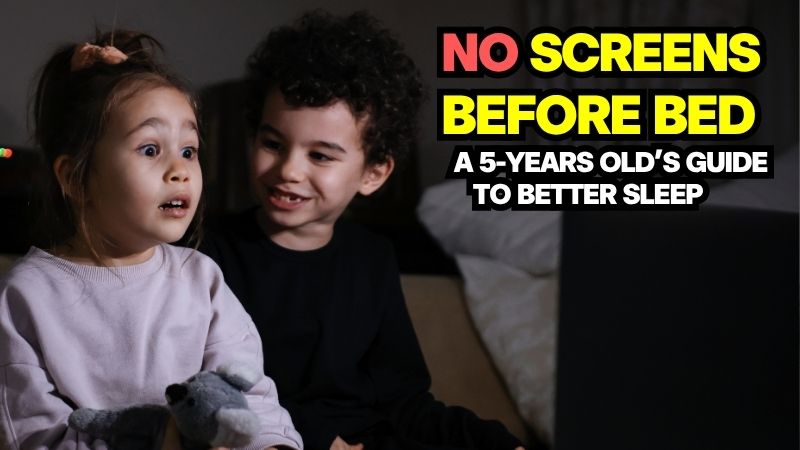
Screen Time Before Bed is one of those parenting topics that feels small at first, but can quietly affect the whole night.
As a parent, I have tried very hard not to allow screens during the hour before bed. I would much rather read books. My worry has always been simple: if my child watches exciting TV scenes right before sleep, bedtime may become harder, sleep quality may drop, and scary or stimulating images may stay in his mind too long. I have felt something similar myself. When I fall asleep after looking at my phone too much, my sleep often feels lighter and less refreshing. That made me think young children may be affected even more.
Official guidance supports being careful here. The Canadian Paediatric Society recommends avoiding screens for at least 1 hour before bedtime for children ages 2 to 5, and the CDC’s 5-year-old guidance says to avoid screens for 1 to 2 hours before bed and to keep screens out of the bedroom.
Why is screen time before bed a bigger problem?
Not all screen time affects children in the same way. Watching something earlier in the day is very different from watching something right before sleep.
The NIH’s sleep guidance says the hour before bed should be used for quiet time, and that bright artificial light from a TV or computer screen can signal the brain to stay awake. The Canadian Paediatric Society also says screen use before bedtime is consistently linked with sleep problems in young children, including shorter sleep, later bedtimes, and more bedtime resistance.
That is why bedtime screen use matters so much. It is not only about the number of minutes. It is also about timing. Even a short video at the wrong time can work against the body’s natural wind-down process. The CDC again advises avoiding screens for 1 to 2 hours before bed and not keeping screens in a child’s bedroom.
How much sleep does a 5-year-old really need?
This matters because many parents do not realize how much sleep a 5-year-old still needs.
According to the CDC, children ages 3 to 5 need 10 to 13 hours of sleep in 24 hours, including naps. The NIH gives the same general range, and the CDC’s 5-year milestone page repeats that recommendation specifically for this age.
That means even a slightly delayed bedtime can add up. When bedtime screens push sleep later, children may lose total sleep across the week. The CDC notes that enough sleep supports health and development, which helps explain why parents often notice changes in mood, focus, and behavior after a bad night.
How bedtime screens affect sleep
Parents often notice the same pattern first. A child looks tired, but still does not settle easily. The screen goes off, and suddenly there is resistance, whining, or even a second burst of energy.
That pattern fits what child health guidance describes. The Canadian Paediatric Society links bedtime screen use with delayed sleep onset, shorter total sleep, later bedtimes, and more bedtime resistance. The NIH also recommends avoiding bright artificial light from screens before bed because it can interfere with the sleep-wake cycle.
This does not mean every bedtime screen causes a disaster. But if a child regularly watches TV, tablets, or phones before sleep, it can make a healthy bedtime rhythm much harder to build. That is one reason the AAP Family Media Planencourages families to create screen-free times and spaces that fit family routines.
Why reading books is a better bedtime habit
📚 If parents want a calmer alternative, bedtime reading is one of the best choices.
The NIH says the hour before sleep should be quiet time, and Head Start recommends quiet bedtime activities such as reading books, talking softly, and listening to calm music. That makes reading a very practical bedtime habit because it helps children slow down instead of getting more stimulated.
Reading also offers benefits beyond sleep. The American Academy of Pediatrics says shared reading helps build social-emotional, cognitive, language, and literacy development. In other words, bedtime books are not just a nice routine. They also support connection, vocabulary, and early learning at the same time.
So when parents choose a book instead of a tablet before bed, they are not simply taking something away. They are replacing it with an activity that is calmer, more relational, and developmentally useful.
Should parents avoid scary or exciting content at night?
Yes, that is a wise idea.
Even when children seem fine in the moment, stimulating content can stay with them longer than adults expect. The AAP Family Media Plan is built around setting thoughtful media rules for the family, and both the NIH and Head Start point families toward a quiet, calming routine before bed rather than a stimulating one.
That does not mean a child will always have a nightmare after an exciting show. But bedtime is usually not the best time for intense, fast-paced, or upsetting content. If the goal is quality sleep, the last part of the evening should help the brain settle down, not stay activated.
What is the 3/2/1 bedtime rule?
Parents often see this online, but it helps to be careful here. The “3/2/1 bedtime rule” is not one single official pediatric rule used by all major medical or government organizations.
Still, the most useful part lines up well with official sleep guidance. The NIH says to use the hour before bed for quiet time, avoid bright artificial light from screens, and avoid heavy meals close to bedtime. Head Start also recommends turning off screens at least 1 hour before bedtime and building a calm routine in the 30 to 60 minutes before sleep.
So for parents of 5-year-olds, the simplest takeaway is this: the last hour before bed should be low-stimulation and screen-free whenever possible. That is the part most clearly supported by official guidance.
Is 7 hours of screen time bad for kids?
For a 5-year-old, 7 hours is a lot.
The Canadian Paediatric Society recommends limiting routine or sedentary screen time for children ages 2 to 5 to about 1 hour or less per day. The CDC also advises limiting preschool screen time and focusing on healthy routines, especially around sleep.
So while every family can have unusual days, 7 hours is far above what pediatric guidance suggests for this age group. More importantly, that amount of screen time can easily crowd out sleep, play, reading, movement, and conversation.
How to create a sleep-friendly bedroom
🌙 A good bedtime routine works even better when the room itself supports sleep.
The CDC recommends a calm bedtime routine and keeping screens out of the bedroom. The NIH says a sleep-friendly room should be cool, quiet, and dark, and that people should avoid watching TV or using electronic devices in bed. Head Start also recommends turning off screens before bed and building a consistent sleep routine.
That means parents do not need a perfect designer bedroom. The basics matter more:
- dimmer lighting
- less noise
- no screens in the bedroom
- comfortable sleepwear
- a room that is not too warm
When parents say, “I think my child sleeps better when the room is a little cooler and the clothes are not too heavy,” that idea fits the overall direction of official sleep guidance. The key is comfort and avoiding overstimulation, not following a complicated formula.
Quick comparison table
| Better before bed | Better to avoid before bed |
|---|---|
| Reading books | TV, tablets, or phones |
| Soft conversation | Fast-paced or exciting videos |
| Dim lighting | Bright screens and bright room light |
| Cool, quiet, dark room | Warm, noisy, overstimulating room |
| Predictable bedtime routine | Last-minute screen time |
| Calm, age-appropriate content | Scary or intense content |
This table reflects the overall direction of guidance from the Canadian Paediatric Society, CDC, NIH, Head Start, and the AAP on sleep routines, screen use, and calming bedtime environments.
A realistic bedtime routine parents can use
Parents usually need something practical, not perfect. Here is a simple example that fits the direction of official guidance.
60 minutes before bed
Turn off TVs, tablets, and phones. Lower the lights a little. Try to shift the home into a calmer rhythm. The Canadian Paediatric Society recommends avoiding screens for at least 1 hour before bedtime, and Head Start gives the same basic advice.
30 to 45 minutes before bed
Bath, pajamas, brushing teeth, and a short conversation about the day can help children transition into sleep mode. Head Start recommends starting a calm bedtime routine 30 to 60 minutes before sleep and keeping it predictable.
15 to 20 minutes before bed
Read one or two books in a softer, calmer voice. There is no official rule that parents must lower their voice in a specific way, but quiet activities and a calm tone fit well with NIH and Head Start guidance for winding down before sleep. Shared reading is also supported by the AAP for child development and parent-child connection.
Lights out
Keep the room dark, quiet, and comfortably cool. Avoid screens in the bedroom. The CDC and NIH both support this kind of sleep-friendly setup.
When to talk to a doctor
Sometimes bedtime struggles are just routine problems. But sometimes they are worth discussing with a pediatrician or family doctor.
Parents may want to ask for help if a child has:
- ongoing trouble falling asleep
- frequent night waking
- repeated nightmares or intense bedtime fear
- severe meltdowns when screens are removed
- major daytime tiredness
- broader concerns about behavior, development, or attention
The CDC says parents should talk with a doctor if they are concerned about sleep or development, and that makes sense especially when sleep problems are starting to affect daytime behavior, learning, or family routines.
Final thoughts
Screen Time Before Bed is not just about a screen. It is about protecting the last part of the day.
I really do think parents help children most when they set gentle but clear limits before bedtime. Children may ask for a screen because it feels easy and familiar. But bedtime is one moment when adults can guide the routine more carefully.
A darker room, a quieter atmosphere, comfortable clothes, a calm voice, and a good book can do much more for sleep than one more video. Official guidance keeps pointing in the same direction: the last hour before bed should help a child’s body and mind settle, not stay switched on.
Read next :